
Energisers for Adults: 6 Quick Games for Training Days and Workshops

On a full-day training, everyone knows what happens around two in the afternoon. After lunch attention drops, people stare into their coffee, and even the best material goes right past them. That's not the moment for another slide. It's the moment to get everyone on their feet for five minutes.
With adults, the biggest obstacle for energisers is awkwardness. Nobody wants to look silly in front of colleagues, and if a game feels childish, half the room watches with their arms folded. A good energiser is short, has simple rules, and has something adults are happy to laugh at: a bit of competition, a bit of clumsiness, a shared failure you can fix together.
Below are six games. Each takes five to ten minutes, none needs equipment, and most work in an ordinary meeting room between the chairs. During the day it's enough to bring one out whenever you see the room getting tired. If one goes down well, feel free to come back to it later; adults like a rematch too.
1. 1, 2, 3
 1, 2, 3
The safest opener, because it's done in pairs and nobody performs in front of the group. The first round is so simple that everyone decides it can't be hard, and then as soon as "2" becomes a clap, the laughing starts. There's always one pair already on the third change and one getting muddled on the first. That's the point. Stop it after two or three minutes, before the pairs get bored.
How to play
No equipment needed!
- Players pair up and stand facing each other.
- In the first round, they simply take turns saying the numbers 1, 2, 3.
- Once that goes smoothly, the numbers can gradually be replaced with actions. For example, instead of saying “2”, players have to clap.
2. Finger Sums
 Finger Sums
Also in pairs, also quick, and with adults it gets surprisingly competitive, especially with a finance or engineering team. Have people switch partners after a few rounds, so the room mixes and people talk who have only nodded at each other since the morning. If the group is flying, switch to multiplication; that usually slows down even the fastest ones, and they laugh about it.
How to play
No equipment needed!
- The players form pairs and face each other.
- On three, both of them hold up some fingers at the same time (0 to 5, or 0 to 10 with two hands).
- The first to say the correct sum of the two numbers wins the round.
To make it harder, the players can multiply instead of adding.
3. Just Don't Do It at the Same Time!
 Just Don't Do It at the Same Time!
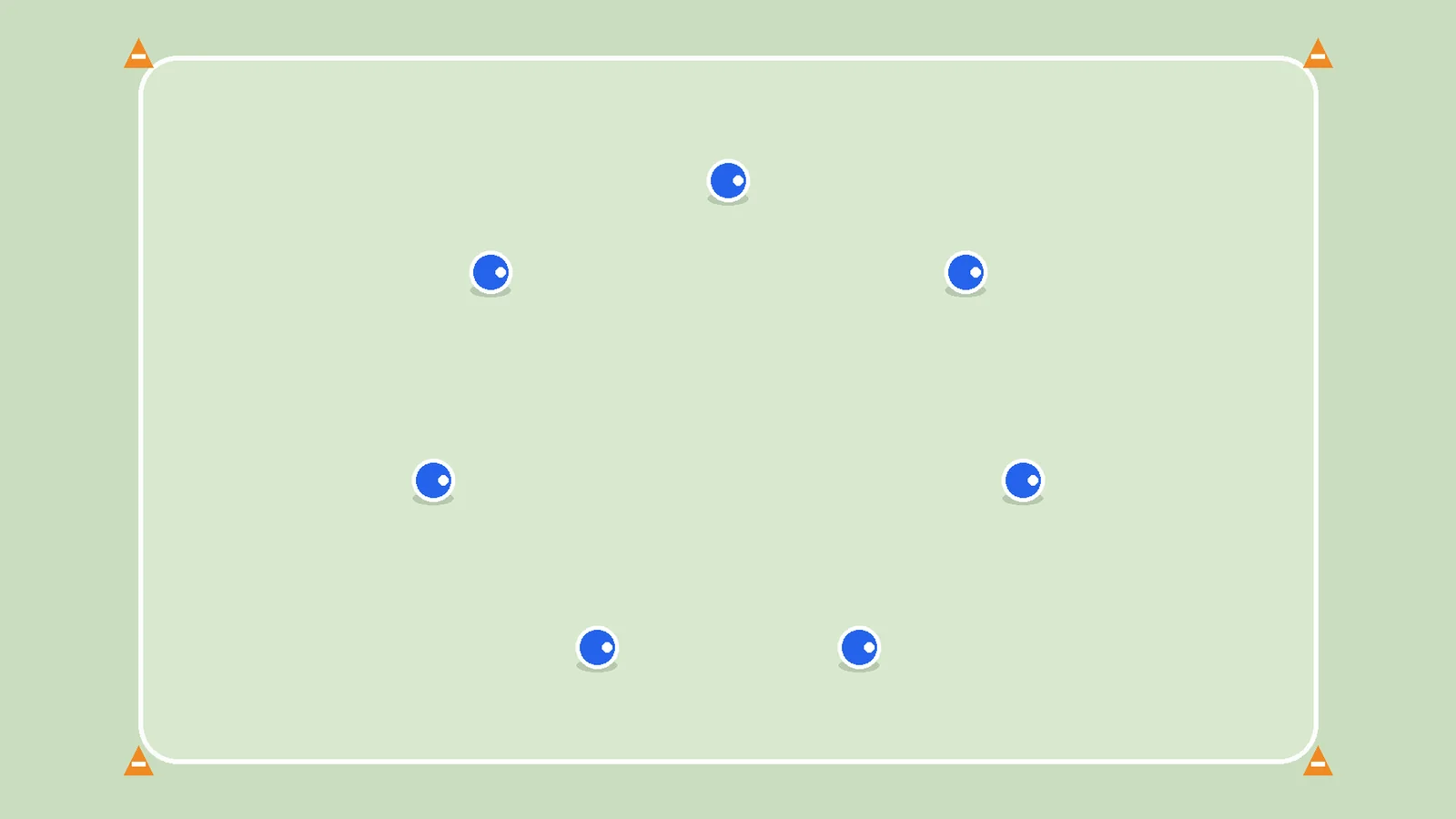
A good energiser before the group has to work together, because it's all about paying attention to each other. There's no order and no signalling, and when two people say "seven" at once, the whole room groans. That becomes the shared failure they want to beat together. Set a realistic target, say half the number of people, and only raise it after that. The popcorn variation is good when everyone is sitting and you want them on their feet.
How to play
No equipment needed!
- The players sit or stand in a circle.
- The group's task is to count up from 1 (e.g. to 20, or to the number of players) so that only one person says a number at a time.
- There is no agreed order, and no signalling is allowed; anyone can say the next number at any time.
- If two people speak at the same time, the counting restarts from 1.
- The group wins when it reaches the target number; to make it harder, set higher and higher targets.
Variations:
- Popcorn: instead of numbers, the goal is for every player to stand up. Everyone starts crouching, and if two people stand up at the same time, the round restarts.
- Crouching: the same as popcorn, but everyone starts standing, and the goal is for everyone to crouch down.
4. Rock, Paper, Scissors Extreme
 Rock, Paper, Scissors Extreme
The loudest game on the list, and that's exactly why it works. Adults start chanting quickly too, because the losers cheer for the winner, not for themselves, so nobody feels silly. By the end the whole room is standing behind the last two players, and everyone is wound up for the final. It works with large groups too. Just check there isn't a presentation going on in the room next door.
How to play
No equipment needed!
- Everyone finds a partner and plays rock-paper-scissors until someone wins.
- The loser stands behind the winner and becomes their fan from then on, loudly chanting their name.
- The winner (together with their fan) looks for a new opponent among the other winners, and they play again.
- The loser and all of their fans move behind the winner, and now they all chant the winner's name.
- The game continues until two players are left, with the whole group behind them; the final round decides the winner.
5. Ninja
 Ninja
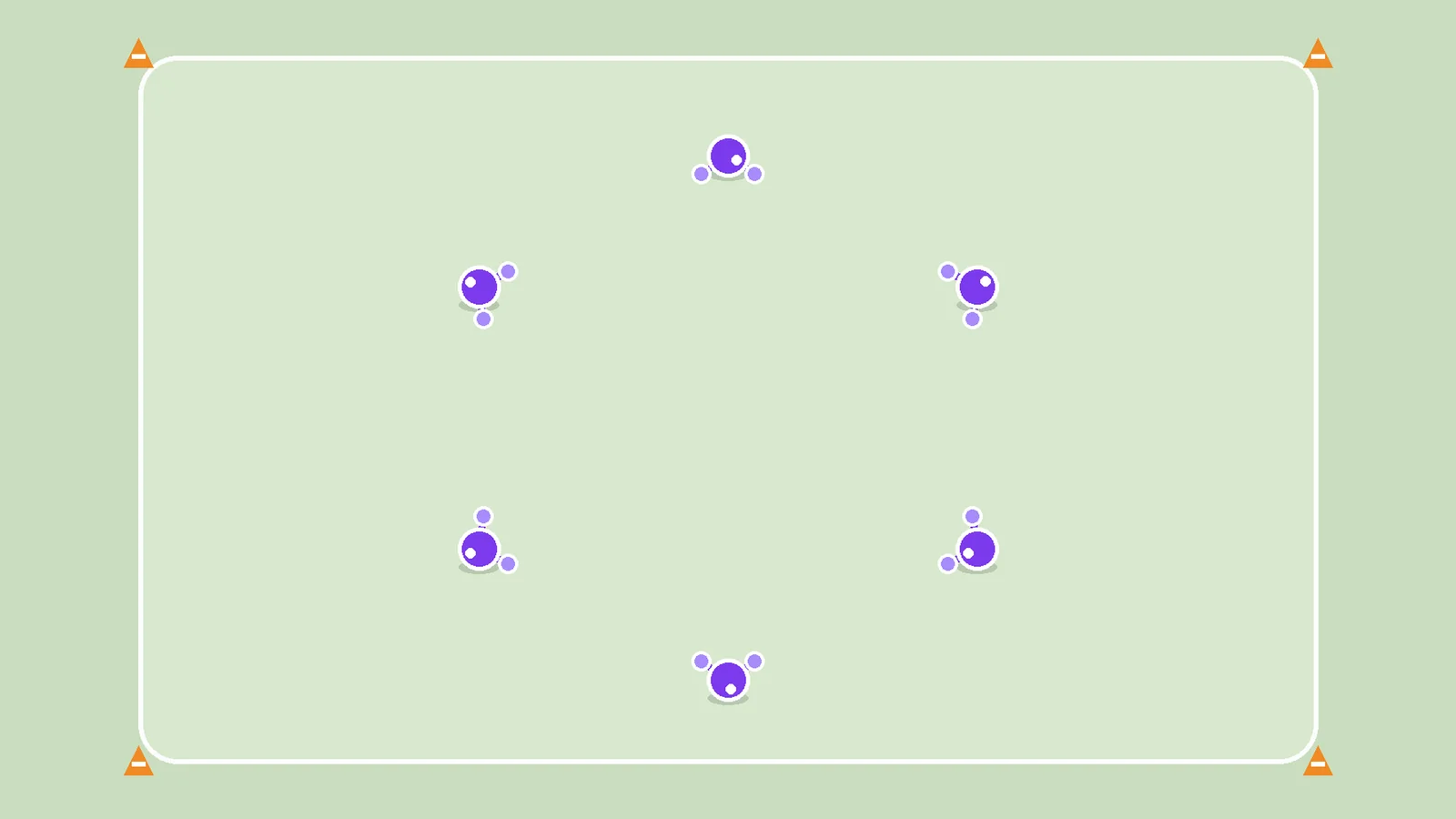
With adults, the ninja pose is what first makes everyone awkward, and then makes everyone laugh. During each slow, frozen move, people take the game surprisingly seriously. It's best in circles of eight to ten. With a bigger group, run several circles at once. If the room is tight, say the jump back is just a small step, or someone will end up in a flipchart.
How to play
No equipment needed!
- The players form a circle, and everyone puts their hands in the middle.
- Together they shout “NIIIINJAAA!”, then jump back into a ninja pose and freeze.
- Going around the circle in turn, each player can make one single move: they can try to hit another player's hand.
- The player being attacked can also pull their hand away with one single move; after moving, everyone freezes in that pose.
- If someone's hand is hit below the elbow, they have to put that hand behind their back; once both hands are out, the player is out.
- The last player still in the game wins.
6. Fruit Salad
 Fruit Salad
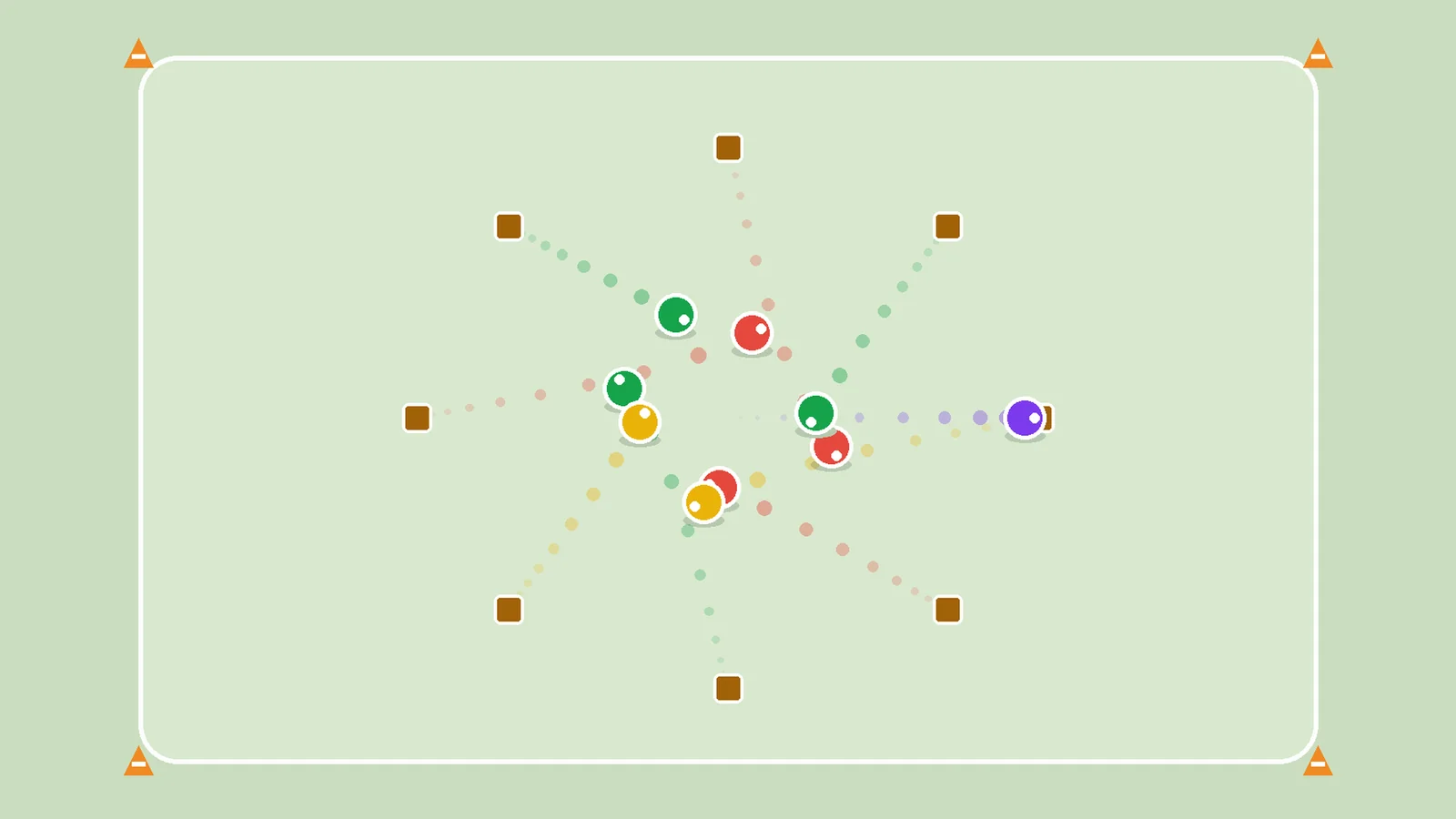
A training room almost always has chairs, so this one is easy to bring out. With adults, play the feature version instead of fruit: everyone who started the day with coffee, everyone who came by bike, everyone who has worked abroad. That way people learn something about each other while they swap seats. Ask them to put their bags under the chairs before you start.
How to play
Materials: Chairs in a circle, one fewer than the number of players (or marked spots on the floor)
- The players sit in a circle, with one player standing in the middle.
- The game leader gives everyone a fruit (e.g. apple, pear, banana) so that there are several players of each fruit.
- The player in the middle calls out one or two fruits; those players have to swap places, while the player in the middle tries to sit down in a free seat.
- Whoever is left without a seat goes to the middle and calls out next.
- If the player in the middle shouts “Fruit salad!”, everyone has to swap places.
Variations:
- You can play with other themes: animals (“Farm!”), family members (“Family!”), etc.
- Instead of a theme, the player in the middle can call out a feature: everyone wearing green, everyone wearing socks, everyone with brown hair, everyone who lives in the city, etc.
What helps with adults
- Say how long it takes. "Five minutes, then we carry on" is much easier to accept than an open-ended game.
- Start in pairs. After a pair game the group is braver, and you can move on to bigger, louder ones.
- Play along. If the trainer looks clumsy in the ninja pose too, the room relaxes.
- Tie it back to the topic. After Just Don't Do It at the Same Time!, two sentences about shared attention or teamwork are worth more than a slide.