
Quiet Games for Kids: 7 Calm Games for When the Group Gets Too Loud

Every group hits the point where it's just too loud. After break, at the end of a lively game, or simply at three in the afternoon. At that point, "Quiet, please!" usually lasts about thirty seconds. What works much better is a game where silence is the rule, or where only the people paying attention can win.
These seven quiet games are like that. None of them involve running or shouting, but they all have something at stake, so the kids don't feel like they're being punished. Most need next to nothing, and you can play them sitting down.
1. If Looks Could Kill
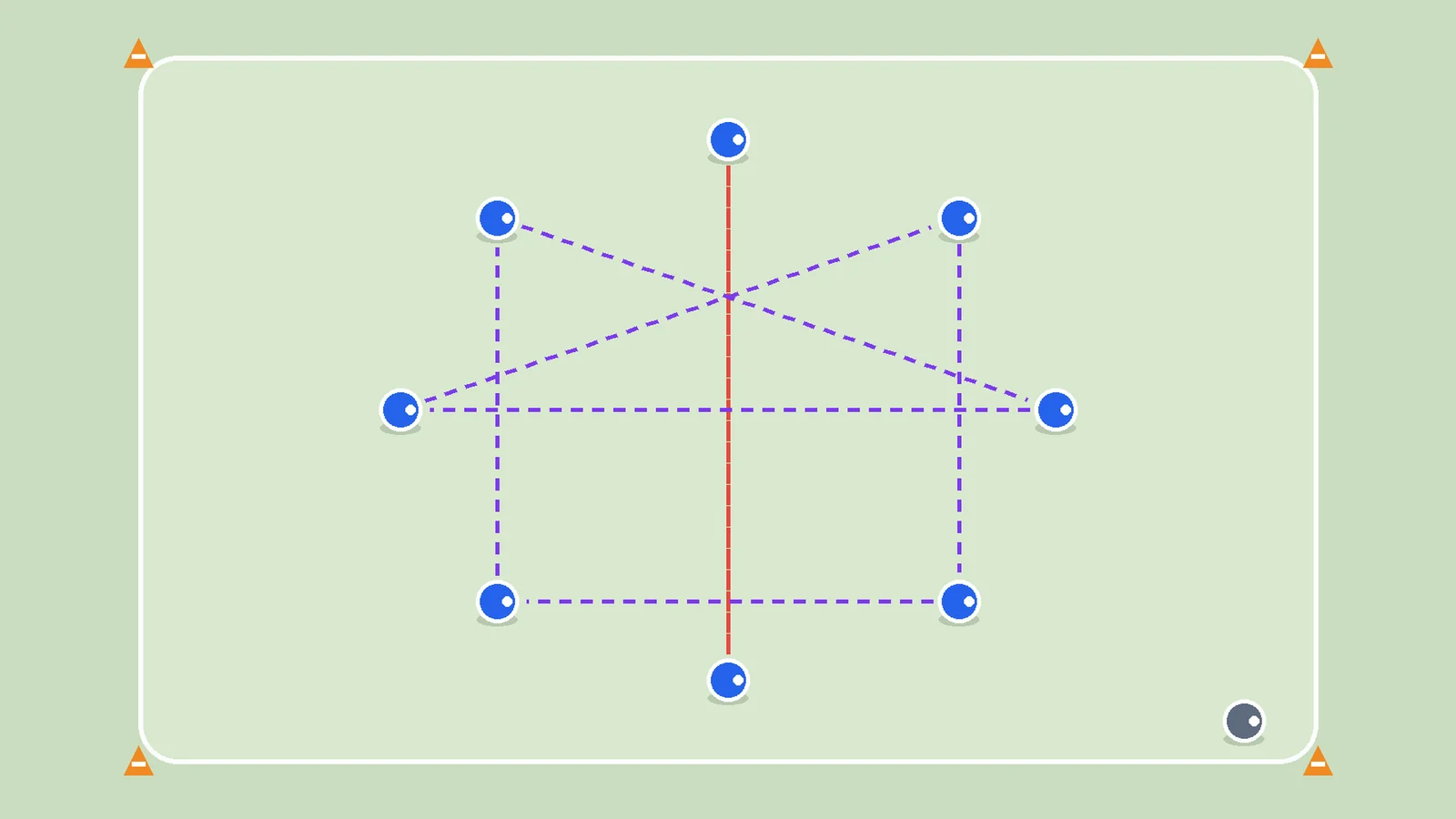 If Looks Could Kill
A good bridge after a loud game, because everyone has to put their head down before the first round even starts, and the group goes quiet on its own. A round takes only a few seconds, but everyone waits tensely for "Go!" Players who are out can sit next to the circle and count down with you, so they're still part of it.
How to play
No equipment needed!
- The players stand or sit in a circle, and everyone looks down or closes their eyes.
- The game leader counts to three and says: “Go!”
- Everyone looks up and stares straight into someone's eyes.
- If two players are looking at each other, both are out; anyone looking at someone who isn't looking back stays in.
- Rounds repeat until one or two players are left; they are the winners.
2. Whispers
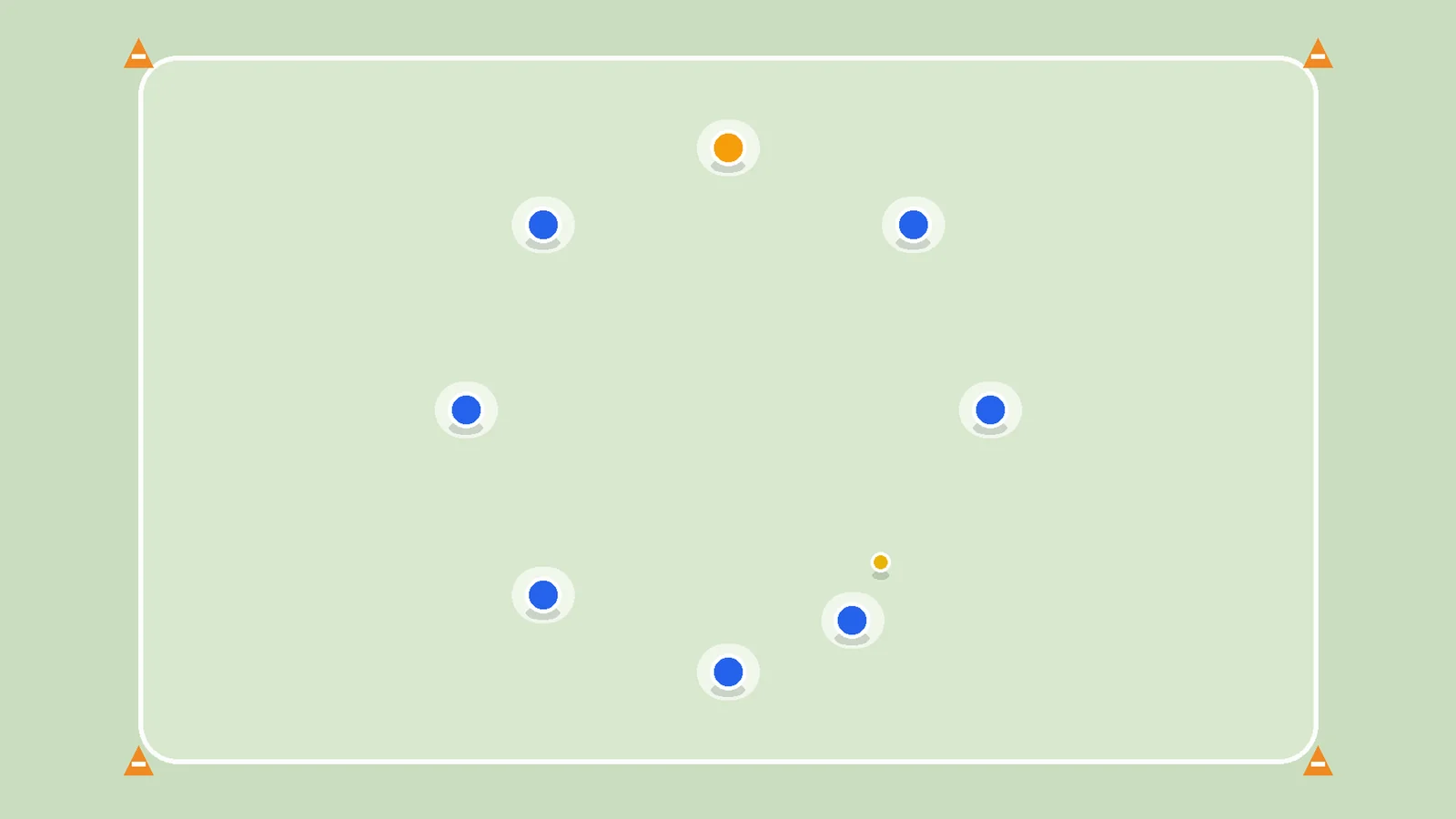 Whispers
You might know it as Telephone. It's calming because the only way to talk is in a whisper, and everyone waits to hear how the message ends up, which is almost never how it started. The longer and stranger the first sentence, the funnier the ending. If they burst out laughing at the end, that's fine. It's easy to get back to quiet afterwards.
How to play
No equipment needed!
- Players sit in a circle.
- The first player thinks of a sentence and whispers it into the ear of the person next to them. That player whispers it on to the next person.
- The message keeps being passed on until it has gone all the way around the circle.
- The last player says out loud what reached them. Then the first player says what the original sentence was, and the two are compared.
3. Hand Squeeze
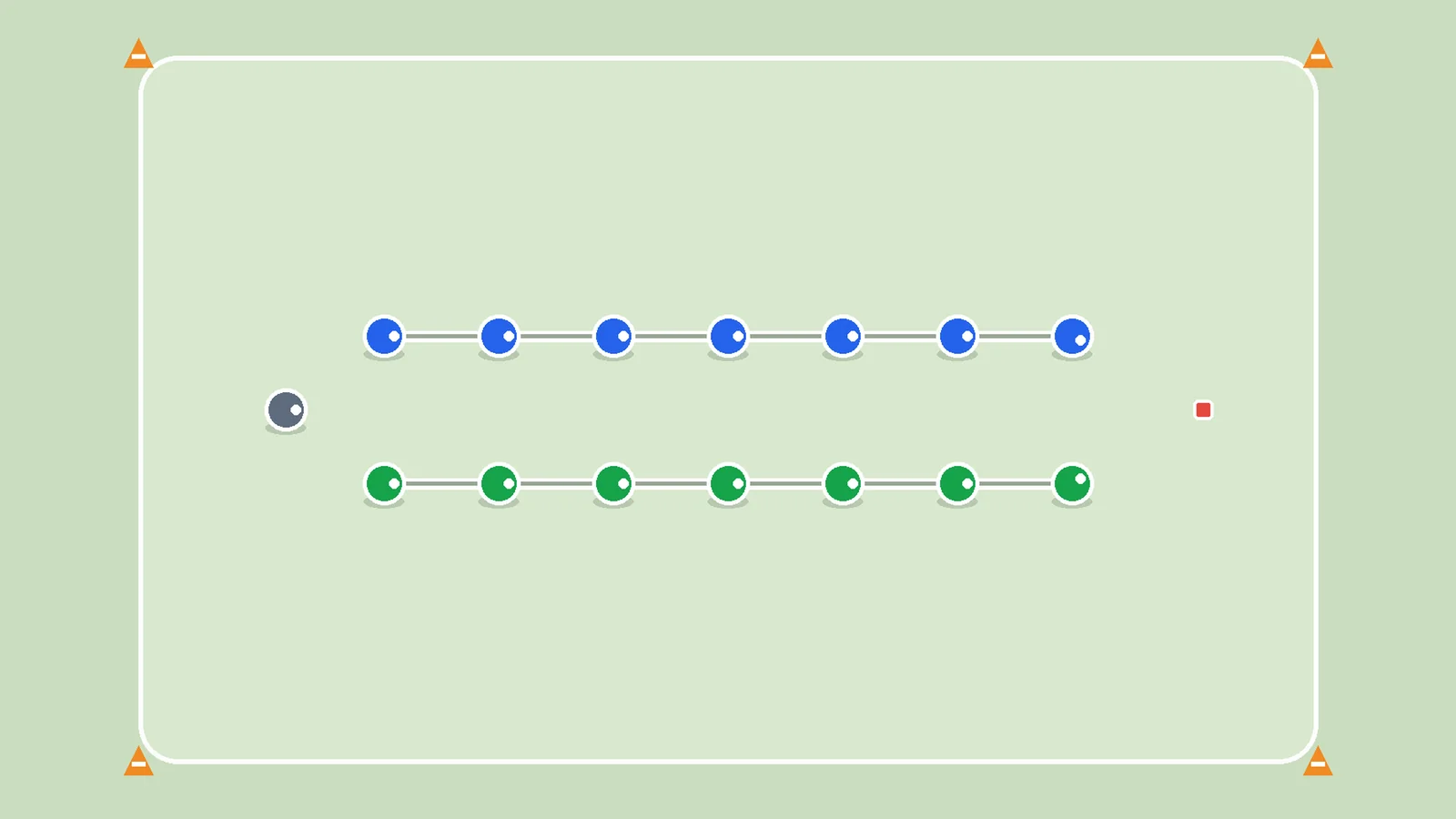 Hand Squeeze
Completely silent, and still a race, which is rare. The kids stand holding hands and concentrate on the squeeze, so there's no way to chat. There's a moment of noise when someone grabs the object, of course, but then everyone goes back to their place. After each round, send the last player to the front of the line, so everyone gets a turn at the object.
How to play
Materials: 1 object of any kind (cup, cone, ball, etc.)
- Players are split into two groups and stand in two lines facing each other. Players in the same team hold hands.
- The game leader places an object at one end of the lines, between the two groups.
- The game leader takes the hands of the two players standing at the other end of the lines.
- The game leader squeezes both players' hands at the same time.
- The players' task is to pass the squeeze down their own chain, one after another.
- When the squeeze reaches the last person, they have to grab the object in the middle as fast as possible.
4. You've Changed
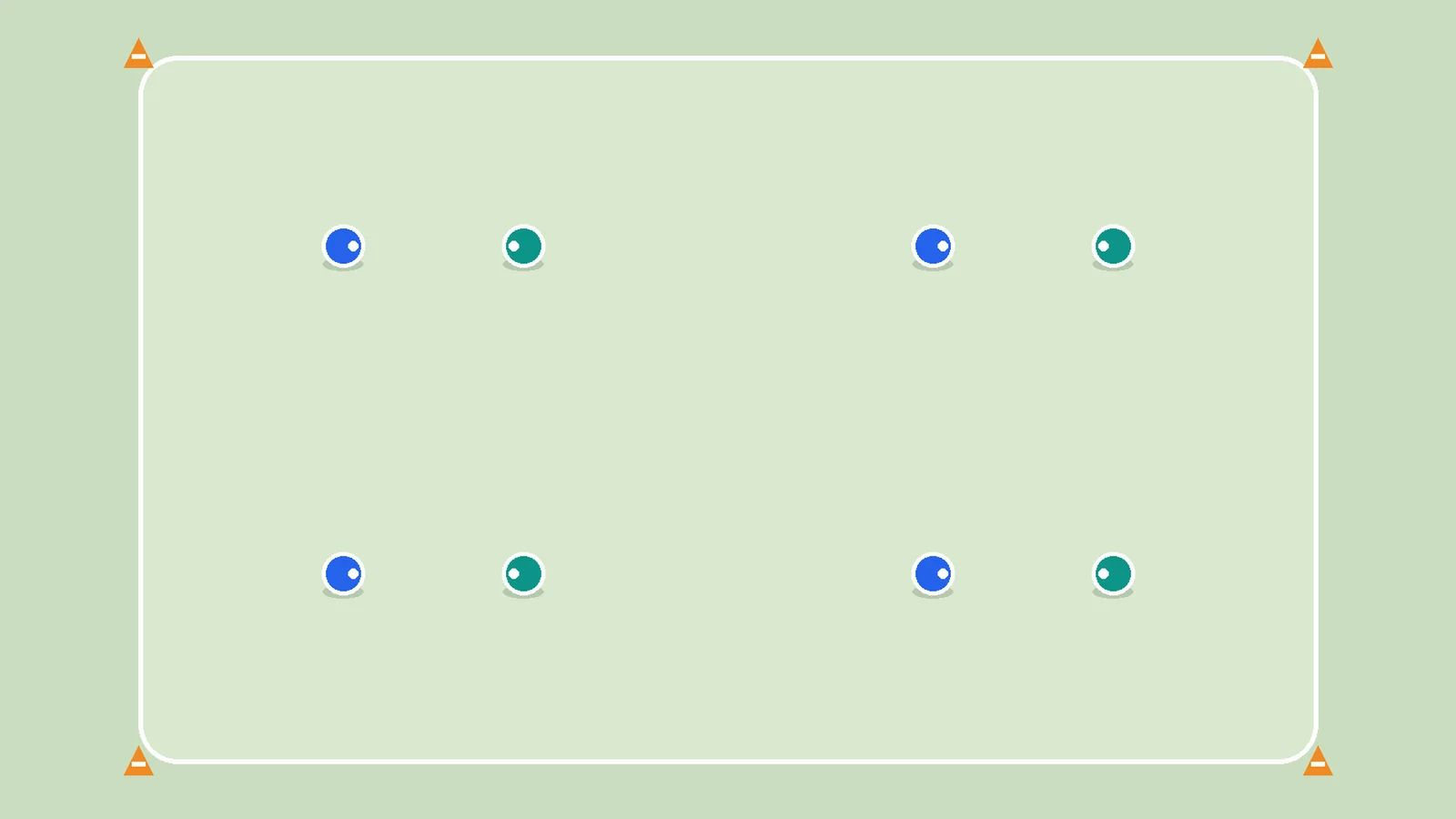 You've Changed
An observation game for pairs that calms the group down without anyone noticing, because they have to look at each other quietly and carefully. Give younger kids some ideas at first about what they could change: a shoelace, their hair, a bracelet, a rolled-up trouser leg. Later, try it with two or three changes at once.
How to play
No equipment needed!
- Players pair up and stand facing each other.
- They look at each other carefully for a few seconds.
- They turn their backs to each other, and one of them changes something about their appearance (for example, takes off a ring, rolls up a sleeve, or moves their watch to the other wrist).
- They turn back around, and the other player has a few seconds to work out what changed.
- Then they swap roles; later, you can make it harder by changing several things at once.
5. The Postman
 The Postman
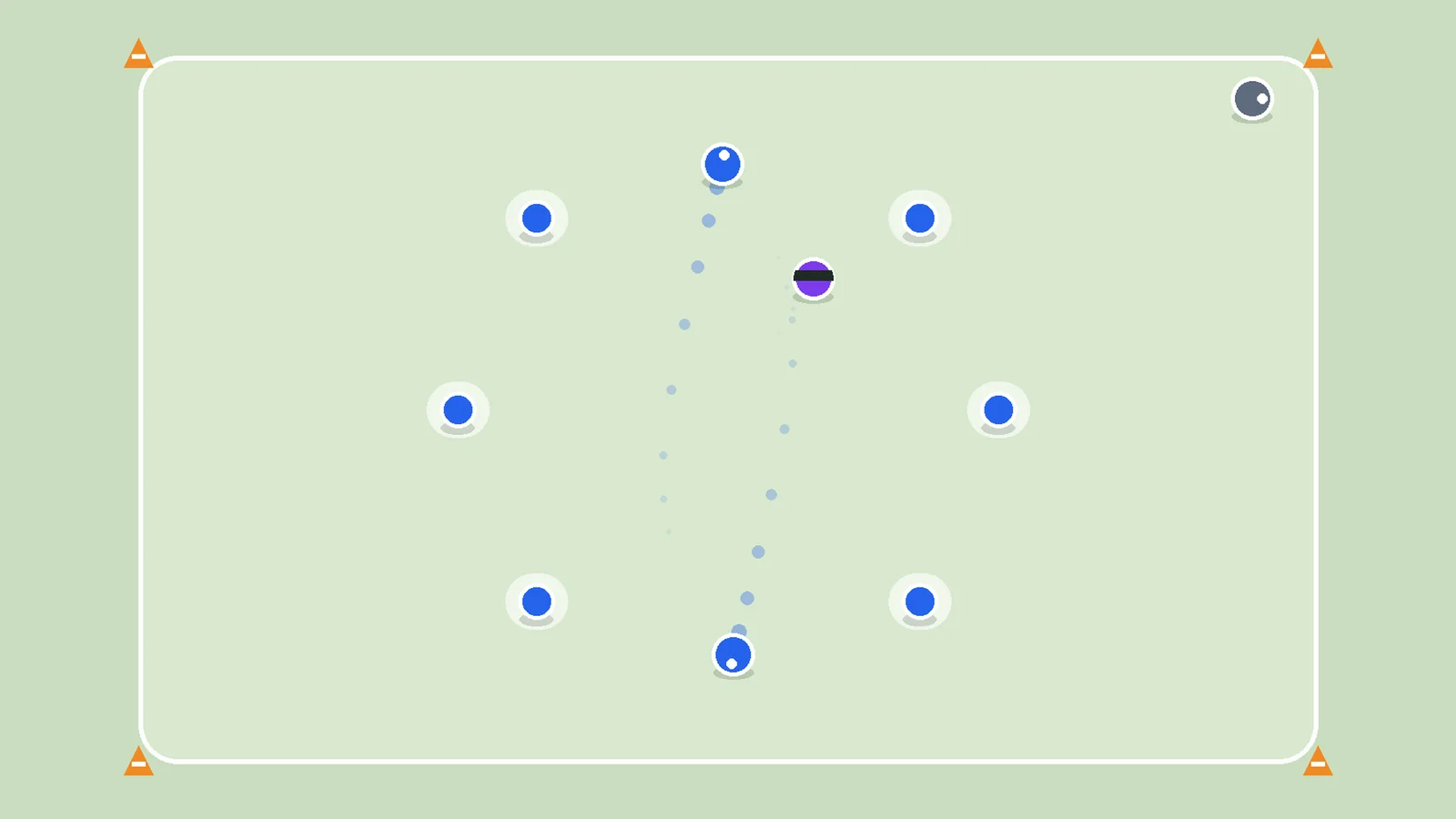
Here, silence is part of the game. The blindfolded player can only tell where the others are by listening. Anyone who runs noisily gets caught, so the kids start creeping around all by themselves. With younger children, let them pick animals or fruit instead of towns, which are easier to remember.
How to play
Materials: A blindfold
- Players sit in a circle.
- One player stands in the middle, blindfolded.
- Every player picks a town or city.
- The game leader starts saying, “A letter was sent from Pécs to Szeged.”
- The two players with those towns stand up and have to swap places.
- The player in the middle tries to touch one of them.
- If they manage it, they win the round; if not, two new towns are called.
6. Group 21
 Group 21
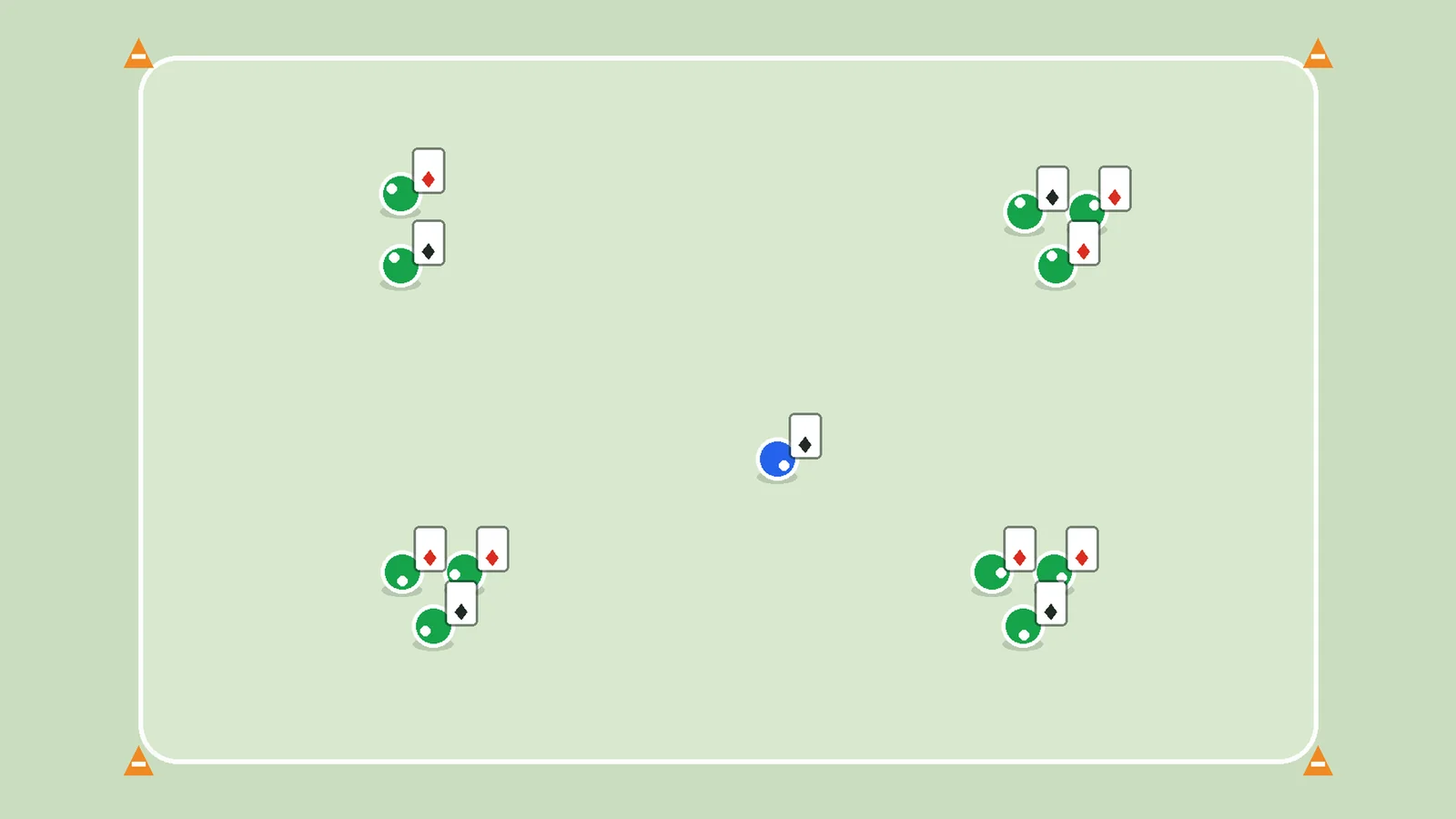
Best for older kids and adults, because it takes some maths and no talking at all. The group tries to team up using gestures, fingers and holding up their cards, and the silence holds for surprisingly long. If not everyone knows playing cards, spend a minute on the values first and write them on the board.
How to play
Materials: 1 deck of playing cards, Stopwatch
- Every player gets one card from a deck of playing cards.
- Card values: number cards are worth their number, face cards are worth 10, and an ace is worth 1 or 11.
- Without talking, the group has to form small teams so that the cards in each team add up to exactly 21.
- The game leader keeps time; at the end they count how many blackjacks were made.
- Several rounds can be played with new cards, trying to beat the previous result.
7. Silent Pair Drawing
 Silent Pair Drawing
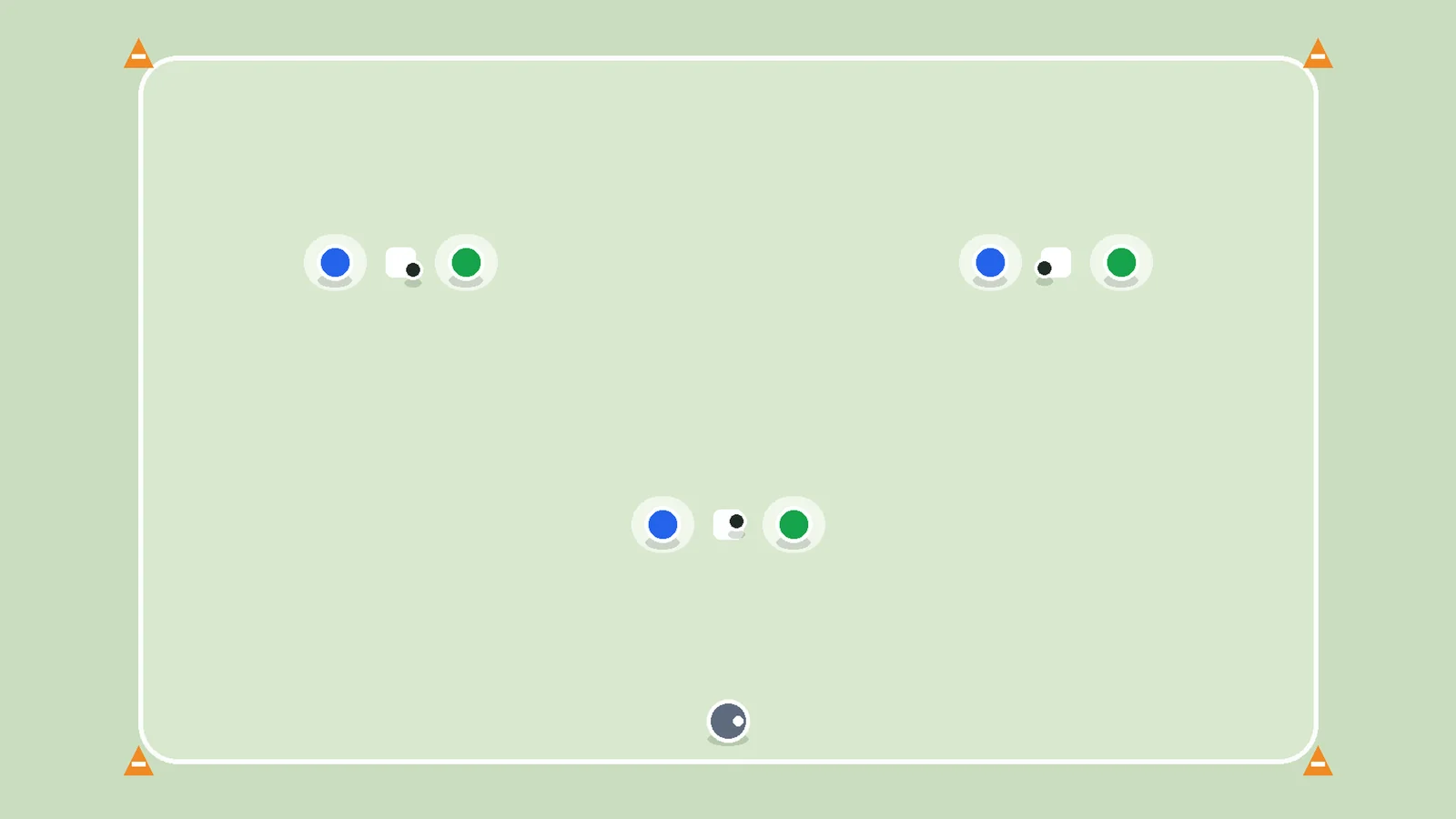
Good for the end of the day, since it's played sitting at a table, with three minutes of total silence. Sharing one pen forces the pairs to pay attention to each other and decide who leads without a word. The drawings almost always come out strange, and talking about them is the best part: what one of them had in mind, what the other thought, and what they ended up with.
How to play
Materials: One sheet of paper per pair, One pen per pair, Something to keep time with
- The players form pairs; each pair gets a sheet of paper and a pen.
- The game leader announces that from now on the pairs may not talk.
- The players' goal is to draw something together while both of them hold the pen at the same time.
- On the game leader's signal, they draw together on the same sheet for 3 minutes in complete silence.
- When the time is up, the pairs show their drawing and say what they thought they were drawing.
- Finally, the group can briefly talk about what it was like to work together without words and what tactics each pair chose.
How to really calm a group down
- Explain quietly. If you talk softly, they have to be quiet to hear you.
- Don't start with the quietest game. After a lively game, use a bridge like If Looks Could Kill, and only then move on to the completely silent ones.
- Don't make it a punishment. If a quiet game isn't the result of them misbehaving, they'll play it much more happily.