
Tag Games for Kids: 8 Variations That Beat Plain Old Tag

Plain tag has one problem. After ten minutes, the same two or three kids are doing all the running, and everyone else is standing at the edge or got caught ages ago. That's why it pays to know a few variations. They all work the same way, someone chases and everyone else runs, but one extra rule is enough to keep the slower kids in the game or stop the fastest one from winning every time.
The eight tag games below work outside or in a gym, and they're listed roughly from simplest to trickiest. You can explain the first ones to six-year-olds in five minutes, while the last few need a bit more attention. Almost none of them need equipment, just a marked-out area and a couple of minutes for the rules.
Before you start
Mark the edges of the area clearly with cones, coats or a line on the ground. Most arguments start with whether someone ran out of bounds. Agree on what counts as a tag, too. A touch on the shoulder or back is enough, and there's no need to push. If the ages in the group are mixed, give the older kids an extra rule, like tagging with one hand only.
1. Colour Shark
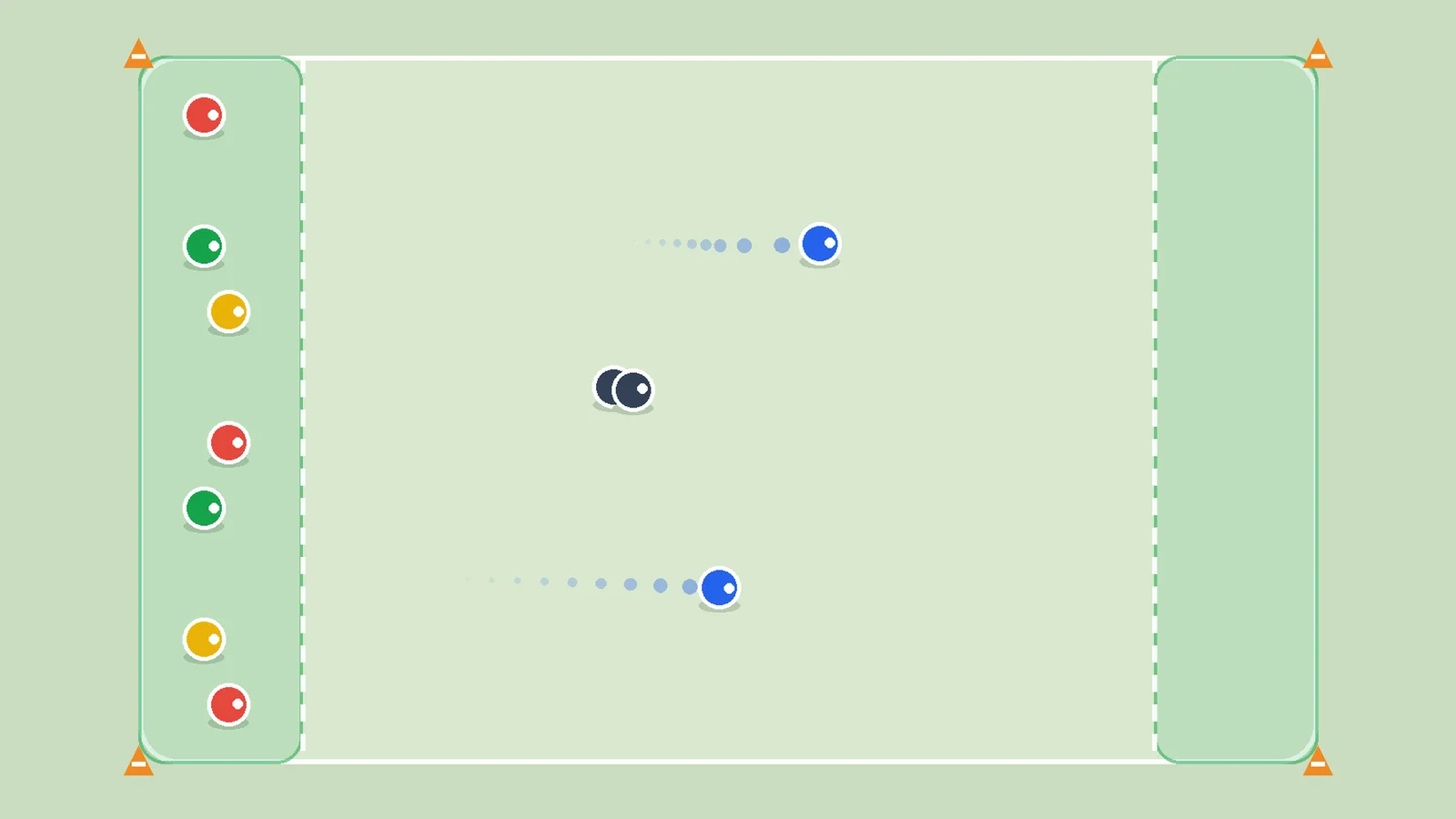 Colour Shark
A good first game, because nobody has to remember anything and only part of the group runs at a time. Everyone else gets a breather and watches who's up. A clever shark calls a colour only two or three kids are wearing, and suddenly the round gets exciting. Watch out for denim blue, though. If everyone's in jeans, ban it.
How to play
No equipment needed!
- The players stand on one side of the field; one player stands in the middle: the shark.
- The shark calls out a colour.
- Everyone wearing clothes of that colour has to run across to the other side of the field.
- Anyone who gets caught also becomes a shark and chases from the next round, but only the first shark calls out the colours.
- The last player to be caught wins.
2. Kangaroos and Crocodiles
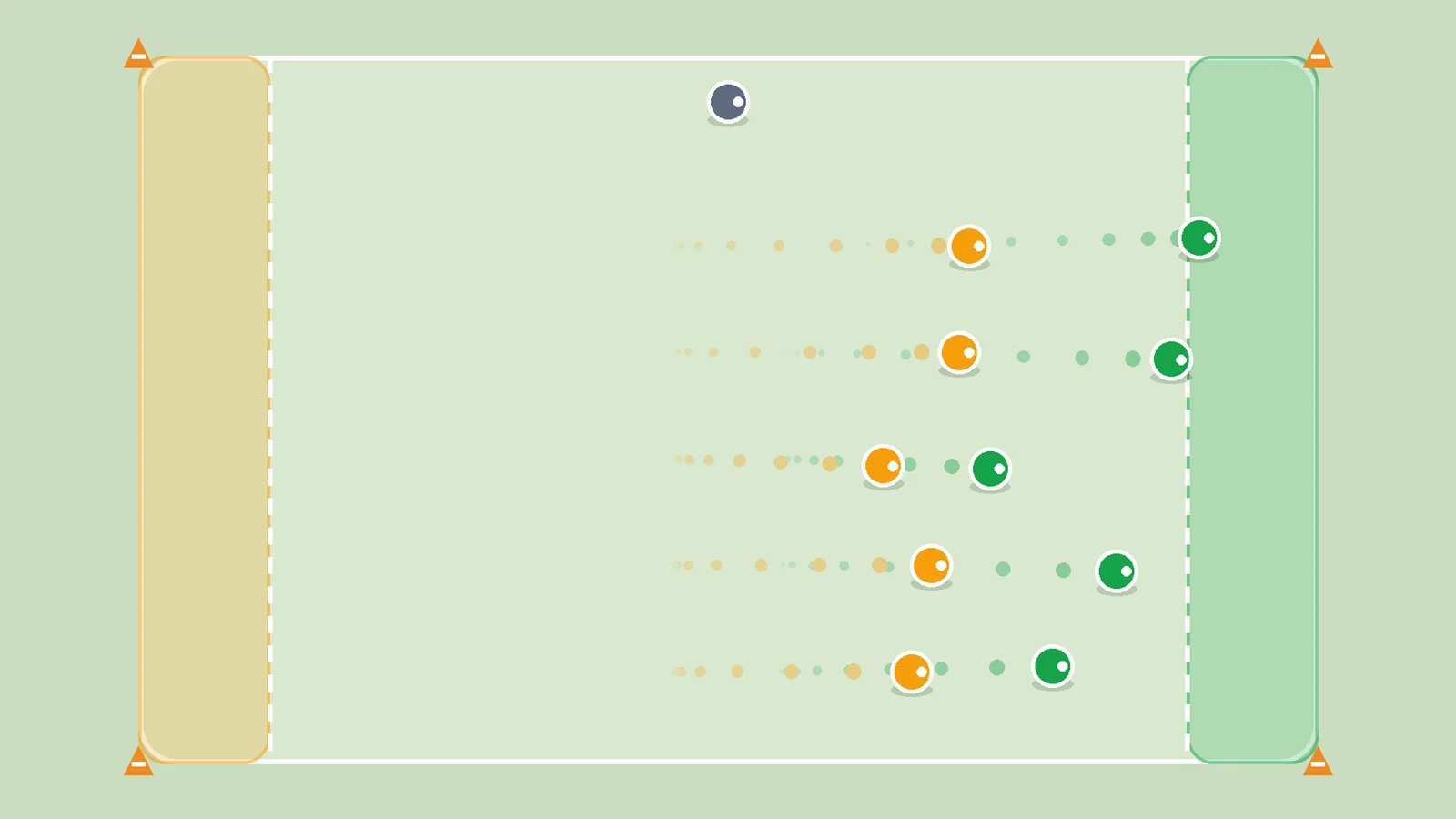 Kangaroos and Crocodiles
In this one, paying attention matters as much as speed. The best moment is when the leader drags out the word, "Kaaa… koala!", and half the team has already set off. Call plenty of animals that sound alike (koala, cockatoo, cricket, crow) so nobody can jump the gun. And since anyone who's caught just switches teams, nobody is ever out, and everyone stays in until the end.
How to play
No equipment needed!
- Players split into two teams and line up facing each other in the middle of the field; one team is the kangaroos, the other the crocodiles.
- Each team has a safety line behind it.
- The game leader calls out animal names; if they call any other animal, nothing happens.
- If they call one team's animal, that team runs toward its own safety line while the other team tries to tag them.
- Anyone who is tagged joins the other team; the team that is bigger at the end wins.
3. Bulldog
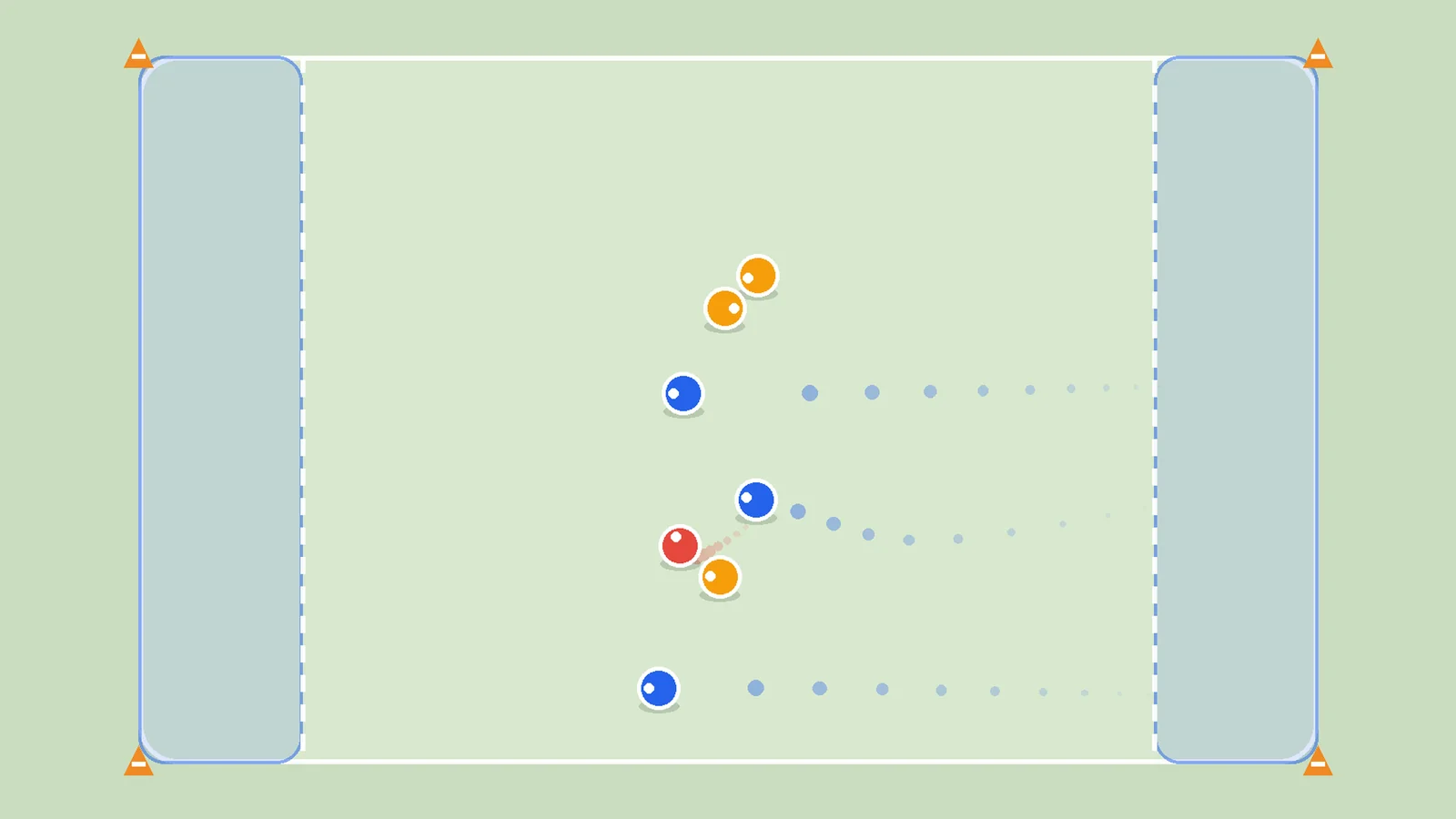 Bulldog
A classic, and it works well with big groups. The trick is that frozen players become taggers too, so the field keeps getting narrower, and in the last rounds the runners have to get through a living obstacle course. Use a wide area, or it's over in two rounds. If things get wild, ask the frozen taggers to just reach out with their arms and not dive.
How to play
No equipment needed!
- The game leader sets up the playing area to suit the space, and the players line up on one side of the field.
- One player, the tagger, stands in the middle and can move anywhere.
- When the tagger calls out “Bulldog!”, the players try to run to the other side of the field without being tagged. Anyone who is tagged must freeze on the spot.
- Frozen players become taggers too, but they can't move from their spot. If they tag someone, that player also freezes and becomes a tagger.
- The game ends when only one player is left untagged. That player is the winner.
4. Octopus
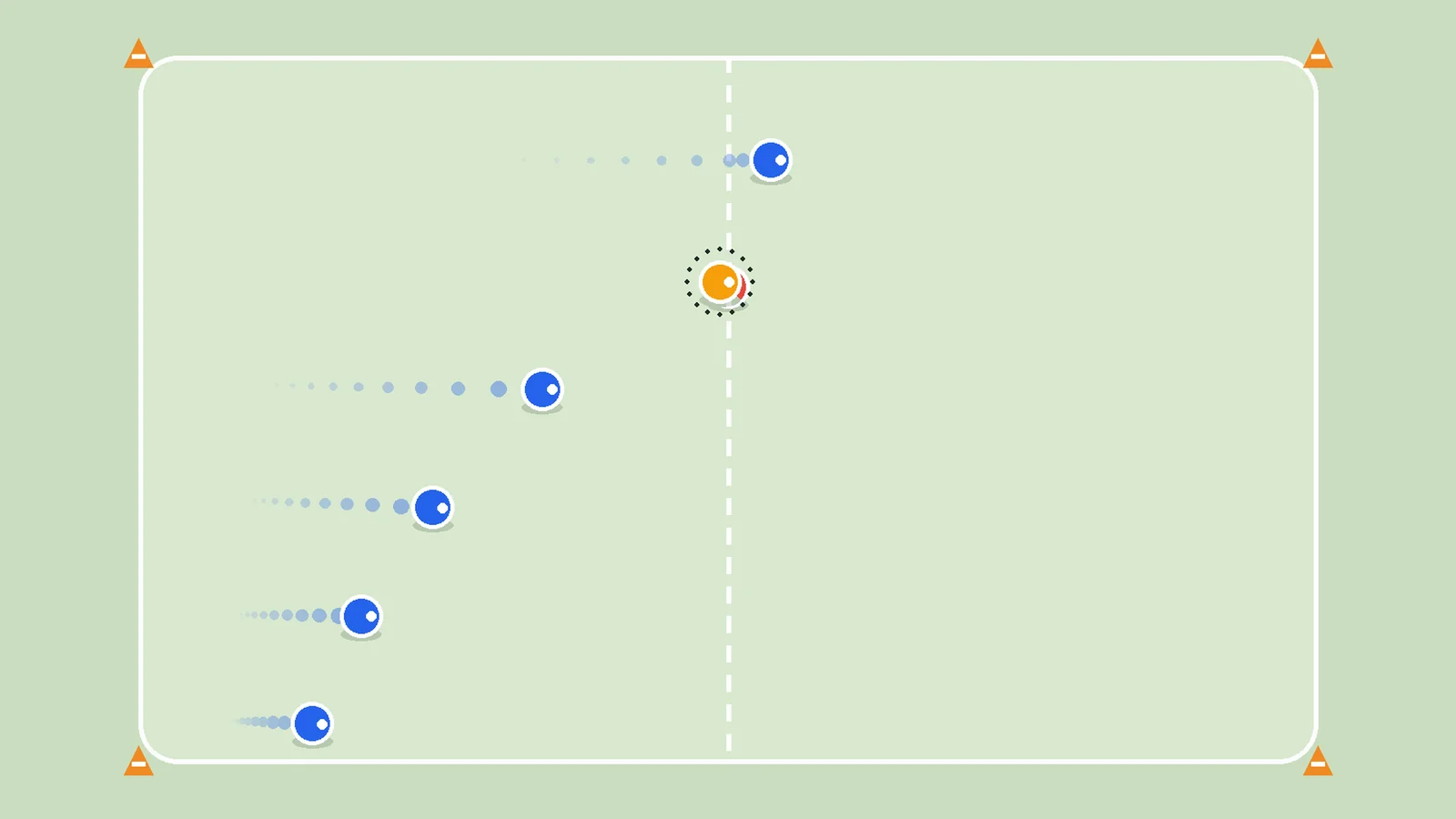 Octopus
At first it looks a lot like Bulldog, but here the octopus can only move along the middle line, and the kids keep running across without waiting for a signal. That makes it much faster. Nobody can hang around at the edge, because the number of crossings is what counts. It's the better pick for younger kids, as the rule is simpler and the chaser doesn't have to run as much. If it gets too easy, let the octopus move anywhere.
How to play
No equipment needed!
- The players stand on one side of the field; the octopus (the chaser) stands in the middle.
- The octopus may only move along a line in the middle of the field.
- The players keep running from one side of the field to the other.
- Anyone who is tagged freezes where they are and helps the octopus as a tentacle: they can tag with their arms, but may not move from their spot.
- The players still in the game count how many times they made it across.
- The player who made it across the most times before being tagged wins.
Variation: it can also be played with the octopus free to move anywhere.
5. Paramedic Tag
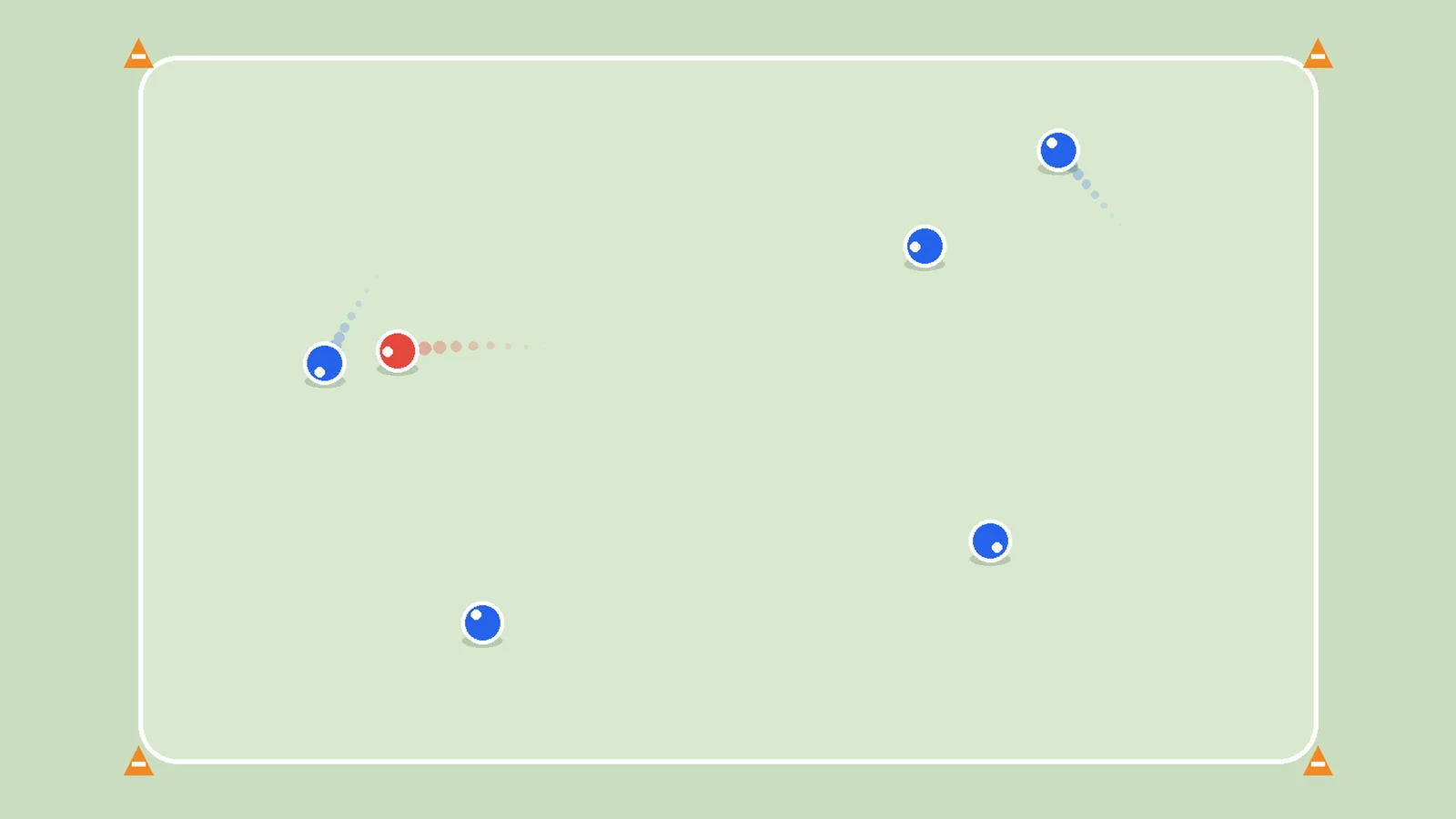 Paramedic Tag
Nobody is ever out in this one, which matters a lot if there are slower kids in the group. A frozen player shows with their hand where they were tagged, and someone has to touch that exact spot to free them. So the kids keep rescuing each other, and the fastest ones suddenly start running to help. With a bigger group, make it two rescuers per freeze, or the tagger will never finish.
How to play
No equipment needed!
- The game leader marks out the play area.
- Depending on the number of players, the game leader picks one or more taggers.
- Once the game starts, any player who is tagged freezes and has to put their hand on the spot where they were tagged.
- Depending on the number of players, 1 or 2 players have to touch the frozen player on the spot where their hand is (where they were tagged) to free them.
6. Rock, Paper, Scissors Tag
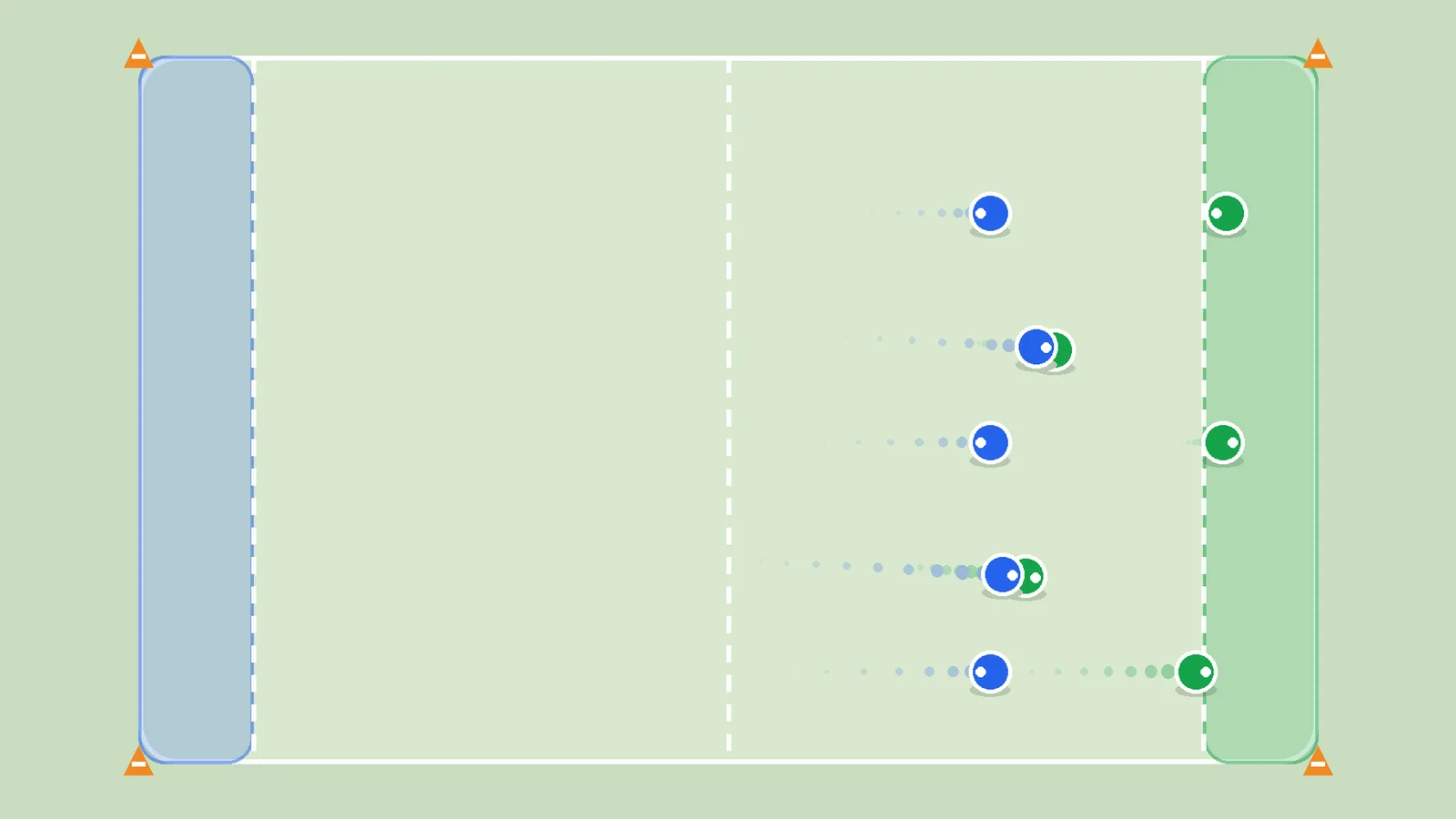 Rock, Paper, Scissors Tag
It takes a bit more organising, but kids love it because rock, paper, scissors decides who runs and who chases. Give the teams time to agree on their sign, and check that everyone really shows the same one. The whole-body version (crouch, star jump, arms out) is much funnier, and you can see from far away who showed what. Mark the base lines clearly, because that's where every round is decided.
How to play
No equipment needed!
- The game leader marks out the play area and splits the players into 2 teams.
- The two teams go to opposite ends of the field.
- Each team agrees on one sign: rock, paper or scissors. Every player in the team must show the same sign.
- The two teams line up facing each other in the middle of the field.
- The game leader counts to three, and on three both teams show their sign.
- This can be done simply with hands,
- or with the whole body: rock = crouch down; paper = arms and legs spread wide; scissors = arms stretched forward, one on top of the other.
- The winning team's goal is to tag players from the other team before they get back to their base.
- The losing team's goal is to run away from the winners and reach their base without being tagged.
- Anyone who is tagged has to join the other team.
7. Strength in Pairs – Pair Tag
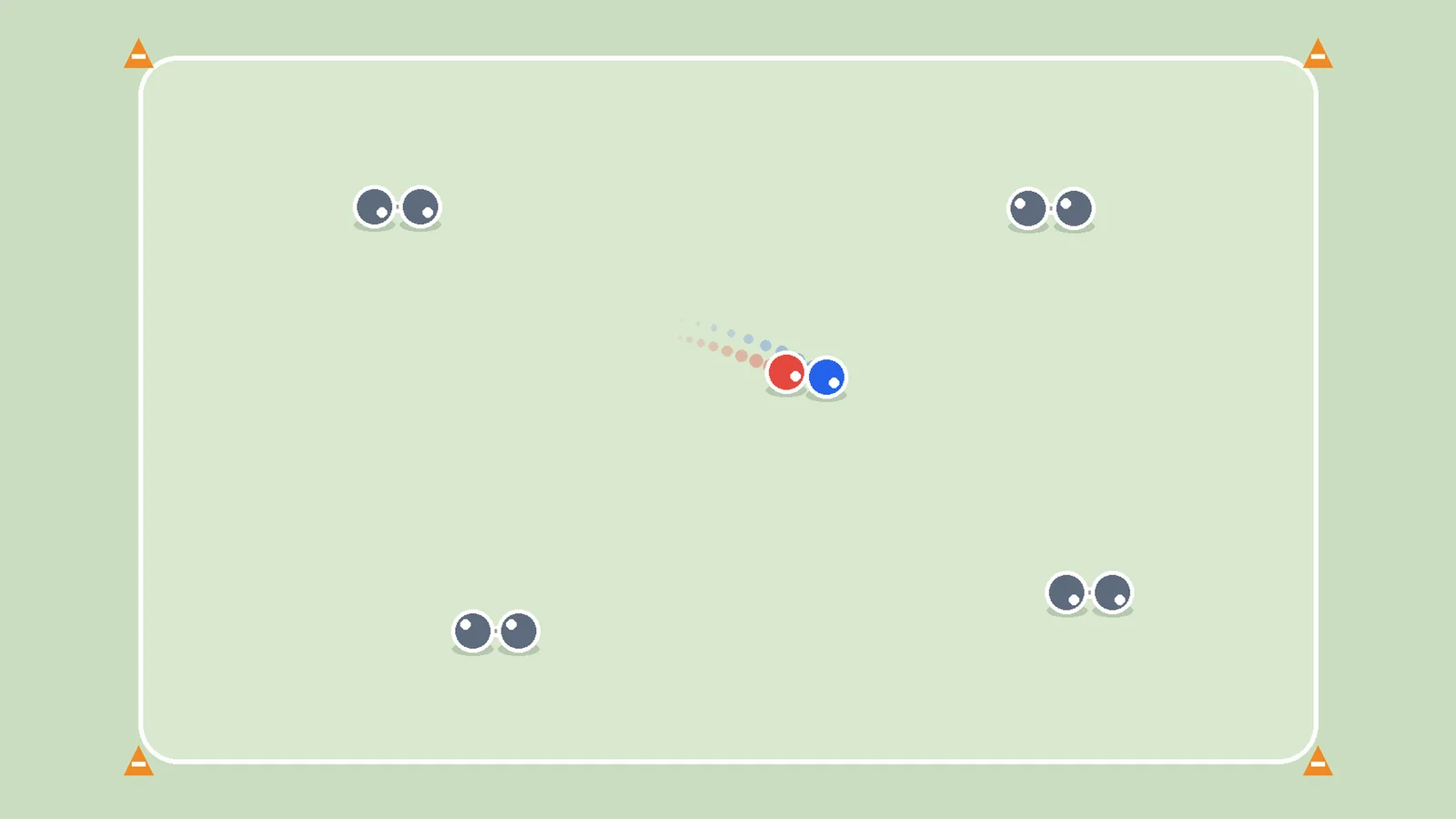 Strength in Pairs – Pair Tag
This is the one that needs the most attention. The pairs have to keep an eye out for the runner linking on, because then one of them has to run off straight away. Try it slowly at a walk first, so everyone understands the swap. Once it gets going, you'll hardly need to step in. It needs a lot of space, so play it outside if you can.
How to play
No equipment needed!
- The game leader marks out the area, and every player finds a partner.
- There will be one tagger and one runner.
- Apart from the tagger and the runner, every pair links arms.
- The tagger's job is to tag the runner; if they do, the runner becomes the tagger.
- The runner's goal is not to get caught. If the runner links onto one side of a pair, the player on the other side has to break away and becomes the new runner, whom the tagger now has to catch.
8. Clothes Peg Tag
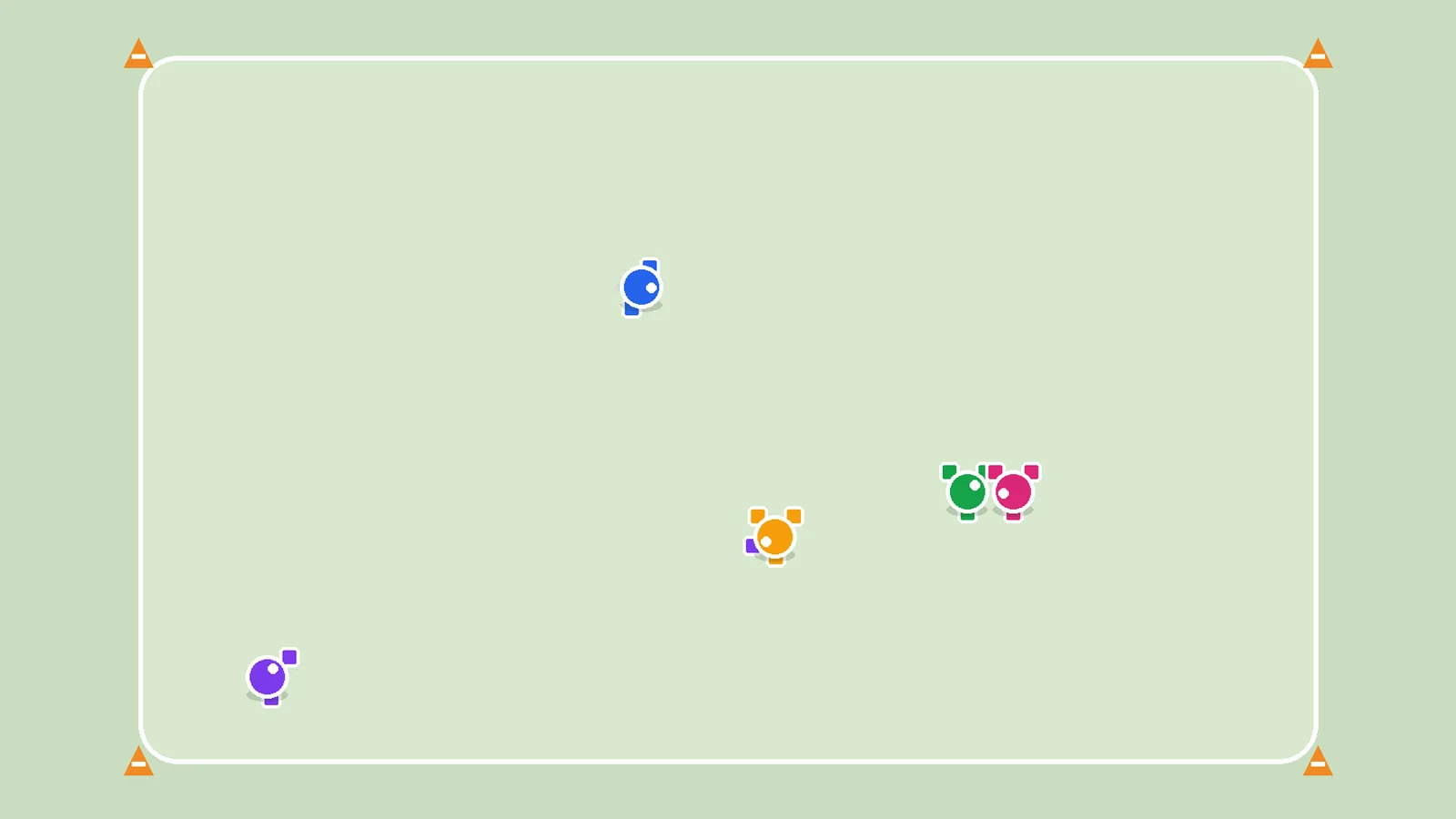 Clothes Peg Tag
Not quite the usual tag, but the same kind of fun, and a good way to wind down after all the running, since it's more about sneaking than speed. Say up front that pegs only go on clothes, never on hair or skin. Three or four minutes is plenty for a round. At the end, try the reverse version, where the player with the most pegs wins. Suddenly they need a completely different plan.
How to play
Materials: About 5 clothes pegs per player, Something to keep time with
- Every player gets the same number of clothes pegs (e.g. 5).
- They clip the pegs onto their own clothes where they can be seen easily (shoulder, back, sleeve, etc.).
- The game leader starts the clock, and everyone tries to put their own pegs on other players without them noticing.
- Anyone who notices a peg on themselves can take it off and pass it on.
- When time is up, the player with the fewest pegs wins (in the reverse version: the one with the most).
Which tag game should you pick?
- For younger kids: Colour Shark, Octopus and Kangaroos and Crocodiles, because you can explain each in one sentence.
- For big groups: Bulldog and Paramedic Tag, because lots of kids run at once and nobody waits around for long.
- If there are slower kids: Paramedic Tag and Kangaroos and Crocodiles, because nobody can get knocked out.
- When they're getting tired: Clothes Peg Tag, which is more sneaking than running.